- dev.png)

CIM Staff - 31 August 2026
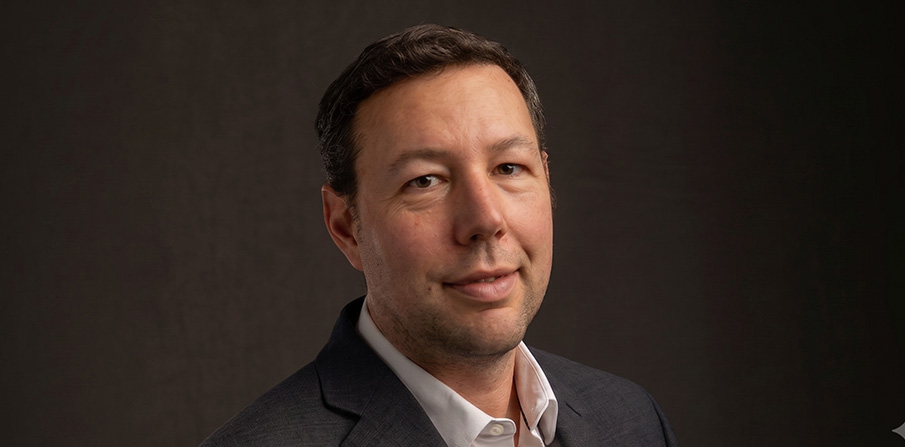
CMP Chair Adam Hesse shares his insights on collaborative innovation, operational excellence, and leadership in the field
Innovation in the mining industry thrives on collaboration, bridging the gap between theoretical knowledge and practical, on-the-ground execution. In this interview, Adam Hesse, a CIM member for eight years, Managing Director of Global Sales and Marketing at Terra Nova Technologies (TNT), and current Chair of the Canadian Mineral Processors Society (CMP), explores how shared expertise is shaping modern operations. From reshaping the industry’s perception through advanced stewardship practices like filtered tailings management to the major career-accelerating benefits of stepping into volunteer leadership roles early on, Adam offers his perspective on why human connection remains the sector’s greatest asset for sustainable progress.
CIM: We talk a lot about innovation, but that’s hard to do in a silo. How does having access to peers in different commodities or regions help you see a solution you might have missed?
Hesse: Real progress comes from connection, learning from others, challenging assumptions, and applying insights in practical ways. Having access to peers across different commodities and regions does not just expand the range of solutions we consider, it reshapes how we understand the problem itself.
At TNT, this kind of shared learning is fundamental to how we approach innovation. It is not just about new ideas; it is about applying them in ways that are grounded in real-world experience and deliver meaningful outcomes. Most importantly, we must keep our approaches to innovation human. By working collaboratively with our teams, partners, and clients, we can co-develop solutions that are not only technically sound but proven in practice.
CIM: What is the one recurring site headache you’ve seen a solution for at the CIM CONNECT Expo this year?
Hesse: One of the most persistent challenges in our industry is the pressure to solve complex, site-specific problems quickly, often with limited time, limited resources, and very high expectations for getting it right the first time.
What consistently helps, and what I have seen reflected in the solutions on display at CIM CONNECT, is collaboration. Not just within a single team or discipline, but across organizations, regions, and areas of expertise. The best solutions rarely come from one place. They come from people who are willing to share what they know, ask hard questions, and work through the problem together.
CIM: If you could take a critic of the industry and show them one specific part of a modern operation, what do you think would surprise them the most?
Hesse: Filtered tailings are a powerful example of how modern mining reflects stewardship in practice, not just intent. If I could show a critic just one part of a modern operation, it would be how we manage tailings today.
The tailings industry has faced well-documented challenges, including catastrophic failures and long-term environmental impacts, and those events have understandably shaped public perception. However, what is often overlooked is how significantly the industry has evolved in response. Modern approaches are rooted in learning, accountability, and a commitment to doing better.
What often surprises people most is the human element behind these advancements. Innovation in this space is driven by people who are deeply committed to safety, environmental stewardship, and building trust. It reflects an industry that is listening, adapting, and investing in solutions that prioritize both present-day responsibility and long-term outcomes.
In that sense, mining today is not defined by past challenges alone. It is defined by how it responds to them. Through innovation, collaboration, and a commitment to continuous improvement, the industry is building safer, more sustainable operations while creating opportunities for people and communities to thrive.
CIM: What is the technical insight you’ve gained from Society peers that you never would have found in a textbook?
Hesse: I have found that peer-shared technical insights are a key driver of professional growth. Metallurgical performance often diverges from theoretical models, equipment behaviour evolves under real operating conditions, and safety outcomes ultimately depend on sound human judgment. This practical knowledge cannot be fully captured in textbooks and is developed through direct, on-site experience.
What stands out most is the context behind the decisions. Through conversations with Society peers, you gain insight into why certain approaches worked, what constraints shaped those choices, and how teams adapted in real time when conditions changed. These are the nuances that rarely make it into formal documentation but are critical to making informed, effective decisions in the field.
There is also a level of openness in peer discussions that accelerates learning. People are willing to share not only successes but also challenges and lessons learned. That transparency helps others avoid repeating mistakes and builds a stronger, more connected professional community.
Ultimately, this exchange of experience strengthens both technical capability and judgment. It allows professionals to bridge the gap between theory and practice, apply knowledge with greater confidence, and continue evolving alongside an industry that is constantly changing.
CIM: As the Chair of CMP, what is the one piece of advice you would give to a young professional about why they should step into a volunteer leadership role early in their career, rather than just attending as a spectator?
Hesse: Don’t wait to be asked. Step forward early, because leadership is learned by doing, not by observing.
When you take on a volunteer leadership role, even at the beginning of your career, you shift from being a consumer of knowledge to a contributor. That shift matters. It accelerates your visibility, builds credibility, and helps you develop meaningful relationships much faster than you would as a spectator. You gain firsthand insight into how decisions are made, how consensus is built, and how experienced professionals approach complex challenges.
What you also gain is perspective. You begin to understand the broader context behind the industry, beyond your immediate role or discipline. That exposure helps you think more strategically and contribute more effectively in your day-to-day work.
Just as important, people around the table start to recognize you not for your title or years of experience, but for your judgment, reliability, and willingness to engage. That kind of recognition builds confidence and opens doors that might otherwise take years to access.
Stepping into leadership early is not about having all the answers. It is about being curious, showing up consistently, and contributing thoughtfully. It is also about learning to listen, to collaborate, and to take responsibility in a visible way.
Over time, that willingness compounds. It builds influence, creates opportunity, and shapes a stronger professional identity than passive participation ever could.