- dev.png)

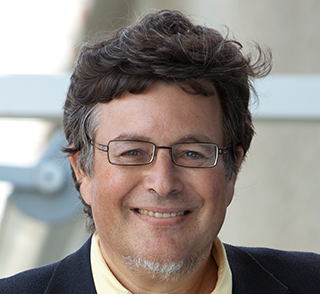
Michel Jébrak was born in Paris, France. He holds doctorates from the University of Orléans, one in mineral exploration and the other in science. He worked for the Geological Survey of Morocco and the Bureau de Recherche Géologiques et Minières, France (BRGM) and was involved in resource assessment in several African and Middle East countries. Since 1987, Jébrak has been a professor in economic geology at UQAM and a consultant for mining companies, governments and international organizations in earth sciences, education and innovation. He was Dean of Science and Vice-Principal, Research and Art at UQAM, president of the Quebec Science and Technology Council, member of the board of directors of SIDEX Limited Partnerships, involved in research networks (Consorem, Divex, CMIC) and exploration manager for Australian, Canadian and French companies. He currently serves as Chair in Mining entrepreneurship, UQAM-UQAT.
Jébrak is an expert on mineral resources, particularly in epigenetic precious, uranium, and base metal ore deposits. He has published more than 80 papers in refereed journals as well as a comprehensive textbook on ore deposits in 2008.
Distinguished Lecturer 2012-13
Lecture Abstract
Innovation in Mining Exploration
The mining industry has been often classified as an old industry. However, it was able to address the increasing demand for metals and materials of a growing and more urbanized population. The usual innovation indicators do not fit the measure of innovation in mining exploration that include target, technological and organisational innovations.
Since 1870, three mining supercycles have developed and correspond to the Victorian, Keynesian and Asiatic globalizations. Each supercycle has been marked by different mineral products, specific technologies and different structures in the innovation chain. The comparison between the Victorian period and the present reveals striking similarities that link the mining industry to the tilting of markets and governments from Europe to America, and from America to Asia.
The end of the first globalization was marked by technical, economic and political failures. Are we facing a similar situation? What should we do as geoscientists and mineral explorers?