- dev.png)

16 June 2026
A conversation with Jenny-Lou Campbell
June 21 is National Indigenous Peoples Day, an opportunity to celebrate the cultures, histories, achievements, and contributions of First Nations, Inuit, and Métis Peoples across Canada. It is also a time for reflection, learning, and building stronger relationships.
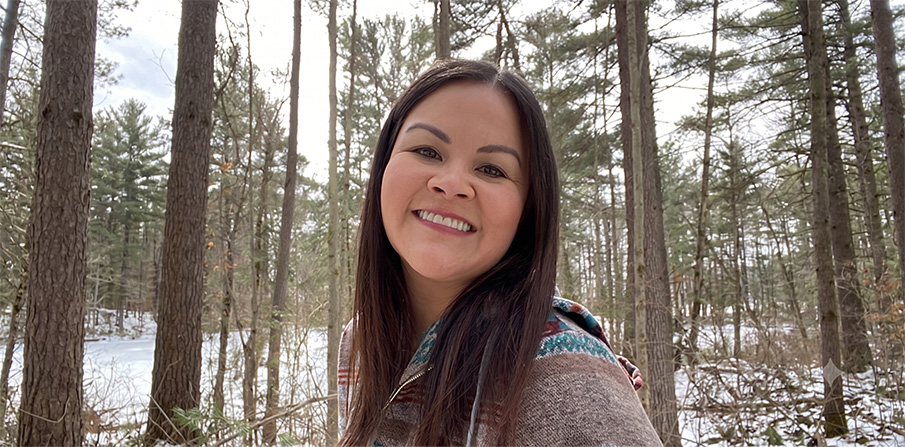
To mark this year’s National Indigenous Peoples Day, the Environmental & Social Responsibility Society of CIM’s Diversity & Inclusion Advisory Group spoke with Jenny-Lou Campbell, Executive Director of the Indigenous Centre of Excellence for Mineral Development (ICEMD), about her journey, the values that guide her work, and the importance of Indigenous participation in the mining industry.
About Jenny-Lou Campbell
Jenny-Lou Campbell is Anishinaabe-Kwe and a proud member of Serpent River First Nation. She was raised in the Ontario mining communities of Elliot Lake and Marathon and is a graduate of Sault College and Lakehead University, where she earned her degree in Natural and Environmental Sciences.
Her career in the mining industry has taken her across Canada, including roles in Hemlo, Ontario; Thompson, Manitoba; and Sudbury, Ontario, where she currently resides. Throughout her career, she has worked in a variety of technical, operational, and policy roles, both underground and on surface. Her experience includes surveying, ventilation, mine planning, project estimating, and policy analysis.
Today, Jenny serves as Executive Director of the Indigenous Centre of Excellence for Mineral Development (ICEMD), where she works to increase Indigenous participation in the mining sector. Through relationship-building between Indigenous communities, industry, and government, she helps improve access to information, resources, training, and opportunities while ensuring Indigenous perspectives and priorities are reflected in mineral development.
What does National Indigenous Peoples Day mean to you?
For me, it signals the beginning of the niibin (summer) and a season I look forward to because it brings the return of some of my favourite things. It's when I can get back to paddling and spending time on or in the water, where I feel grounded and connected to what matters most.
It's also when the berries return and I can enjoy their freshness. This time of year brings pow wow season, travel, and opportunities to come together to celebrate Indigenous cultures and communities across Turtle Island.
How has your culture or community shaped the work you do?
I grew up in mining communities across Northern Ontario and, in my younger years, carried a sense of resentment toward the industry—both because of the environmental impacts I saw and because of the number of times my family had to move when mines opened or closed.
I never initially saw myself working in mining. Through summer student opportunities at a local mine, however, I was introduced to the industry in a different way and discovered the wide variety of career paths available.
As someone interested in STEM but uncertain where to apply my skills, mining opened a door I had not previously considered. Throughout my career, I have carried that early perspective with me. It reminds me of the importance of considering environmental impacts and ensuring Indigenous perspectives and values are part of how development happens so it can be done responsibly and sustainably.
What teachings or values from your Nation guide you in your day-to-day life and career?
As an Anishinaabe-Kwe, the values that guide me in both my life and career are rooted in the Seven Grandfather Teachings: respect, humility, honesty, love, bravery, wisdom, and truth.
Central to these teachings is a deep responsibility for stewardship of the lands, waters, and all beings who depend on them. These values shape how I approach my work and ground me in balance, accountability, and a commitment to protecting the environments that connect our communities.
How can we better support Indigenous youth who are interested in the mining industry, STEM, or the skilled trades?
Representation is critical. Indigenous youth need to see people who look like them and share similar lived experiences thriving in these fields.
Mentorship is equally important. Creating safe and supportive pathways allows young people to ask questions, build confidence, and explore opportunities without barriers.
Storytelling also matters. Sharing our journeys helps make careers in mining, STEM, and the skilled trades feel attainable while reinforcing that Indigenous knowledge, culture, and identity are strengths—not obstacles.
Can you speak to the importance of Indigenous participation in your line of work?
Indigenous perspectives and knowledge systems should be integrated across the entire mining life cycle—from prospecting and exploration through operations, closure, and reclamation.
When Indigenous voices are included in decision-making at every stage, the industry becomes stronger, more innovative, and more sustainable. It helps ensure that development occurs in a way that respects the lands, waters, and values of the communities connected to these projects.
Meaningful participation also builds trust, supports long-term relationships, and creates opportunities for Indigenous communities to share in the benefits of development while honouring their responsibilities to the land.
What reflections or teachings do you hope people carry with them on National Indigenous Peoples Day?
I hope people approach the day with openness—to listen, learn, and reflect in a meaningful way, or to attend a local event celebrating National Indigenous Peoples Day.
For those working in the mining industry, it is an opportunity to deepen their understanding of Indigenous histories, cultures, values, and the communities connected to the lands where projects operate.
Most importantly, I hope people carry that learning forward beyond a single day. Building stronger relationships and supporting responsible development requires ongoing commitment, curiosity, and action throughout the year.
Learn More
For those interested in learning more about Indigenous involvement in the mining industry, Indigenous economic participation, and Indigenous cultures, please explore the following resources:
Indigenous Centre of Excellence for Mineral Development (ICEMD)
https://www.icemd.ca/
OECD Mining Regions and Cities Report – Northern Ontario
https://www.oecd.org/en/publications/mining-regions-and-cities-in-northern-ontario-canada_d3676159-en.html
First Nations Major Projects Coalition: Critical Mineral Value Chain Report
https://fnmpc.ca/wp-content/uploads/FNMPC_Critical_Mineral_Value_Chain_04152026-1.pdf
Firelight Group – Impact Benefit Agreement Community Toolkit
https://firelight.ca/assets/publications/reports/iba-community-toolkit-2026.pdf
Anishinabek Nation Great Lakes Pow Wow Guide
https://www.anishinabek.ca/Flipbooks/2025PowWowGuide.html
Ode'min Kwe Singers Playlist
https://open.spotify.com/artist/4rq3i5oYEoqFmmnpExeqPl?si=43esrjE-TvCYBNI2zoaUgw
As we celebrate National Indigenous Peoples Day, we recognize the leadership, knowledge, and contributions of Indigenous Peoples across Canada and their vital role in shaping the future of the mining industry.