- dev.png)

Maria Olaguera and Michele Beacom - 02 July 2026
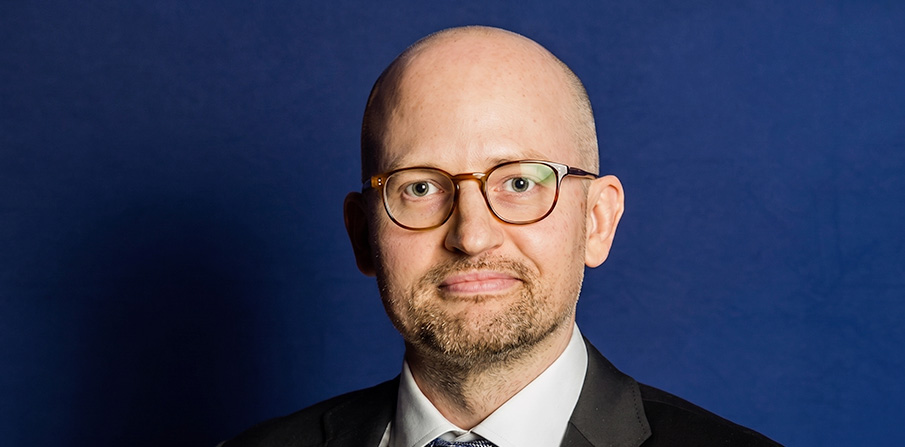
Meet Ryan Weymark
Ryan Weymark has been very busy the last three and a half years. The mining engineer, who has worked in mine operations and project development at various companies since graduating from the University of British Columbia (UBC) in 2009, co-founded Fuse Advisors, a project development consultancy, which was recently acquired by SLR Consulting. During this time, he also co-founded three new public companies—West Red Lake Gold Mines, Nations Royalty and Selkirk Copper Mines—which have a collective market capitalization of over $500 million today.
Weymark has integrated social responsibility into every stage of his work. Through Nations Royalty and Selkirk Copper, he has pioneered Indigenous ownership and governance models that ensure long-term, sustainable benefits for local communities. These projects are redefining how the Canadian mining industry approaches inclusion and equity.
CIM caught up with him at CIM CONNECT 2026 in Vancouver in May.
CIM: Through Nations Royalty and Selkirk Copper, you’ve championed Indigenous ownership. What is the competitive advantage of adopting these inclusive equity models?
Weymark: I think the equity models that we’ve built with Nations Royalty and Selkirk Copper create a framework where essentially all parties have alignment. Historically, we’ve seen companies and communities on opposite sides of the table, with the communities often having very little interest in the project. All they see are the negative potential outcomes. Having interests fully aligned really allows for the project to move forward in the most efficient manner.
And we feel there’s a huge competitive advantage to aligning [those interests]. It will expedite timelines and provide more certainty to outcomes.
CIM: You led Fuse Advisors to acquisition in just three and a half years. What leadership insight from that rapid scale-up do you wish you could share with your younger self?
Weymark: I would say take more risks earlier. When you start out, there is a lack of the self-confidence that you build through experience. And I think the natural instinct for a lot of engineers is to be conservative. That often results in people undervaluing their own skills and ability to create a business like this.
CIM: What is your most effective strategy for making team members feel like a permanent community rather than temporary project staff?
Weymark: I’d say one of the key things for us to ensure that all the team members felt like they were part of a community was a set of values. I would say the one value that really resonated with a lot of young people was honesty. And giving people visibility in terms of how we operate as a business, how we make money and how they play a role in that and really holding no secrets.
I think it’s built a level of confidence with our employees that allows them to see us as more of a community than a company that was employing them.
CIM: Based on your tenure with UBC’s Advisory Committee, what do you see in today’s students that was less common in your own generation?
Weymark: One thing I’ve seen with a lot of the younger generation is a willingness—actually more than a willingness, but a push—to adopt technology. It’s something that I think is going to be a big part of moving our industry forward—their knowledge and their tenacity to make that a core part of our business going forward.
CIM: You are also a Britannia Mine Museum board member. How does reflecting on history help us tell a more effective story about “Brand Canada” and modern global responsibility?
Weymark: I think history is a huge part of our story, and I don’t think we can move forward without reflecting on it. You know, even when the history has negative aspects in it, I think it’s a huge thing for us to understand why things happened to be able to move forward in a positive direction. I don’t think ignoring our past has any benefits. Reflection, striving to continuously improve—I think that is extremely important for our future.